
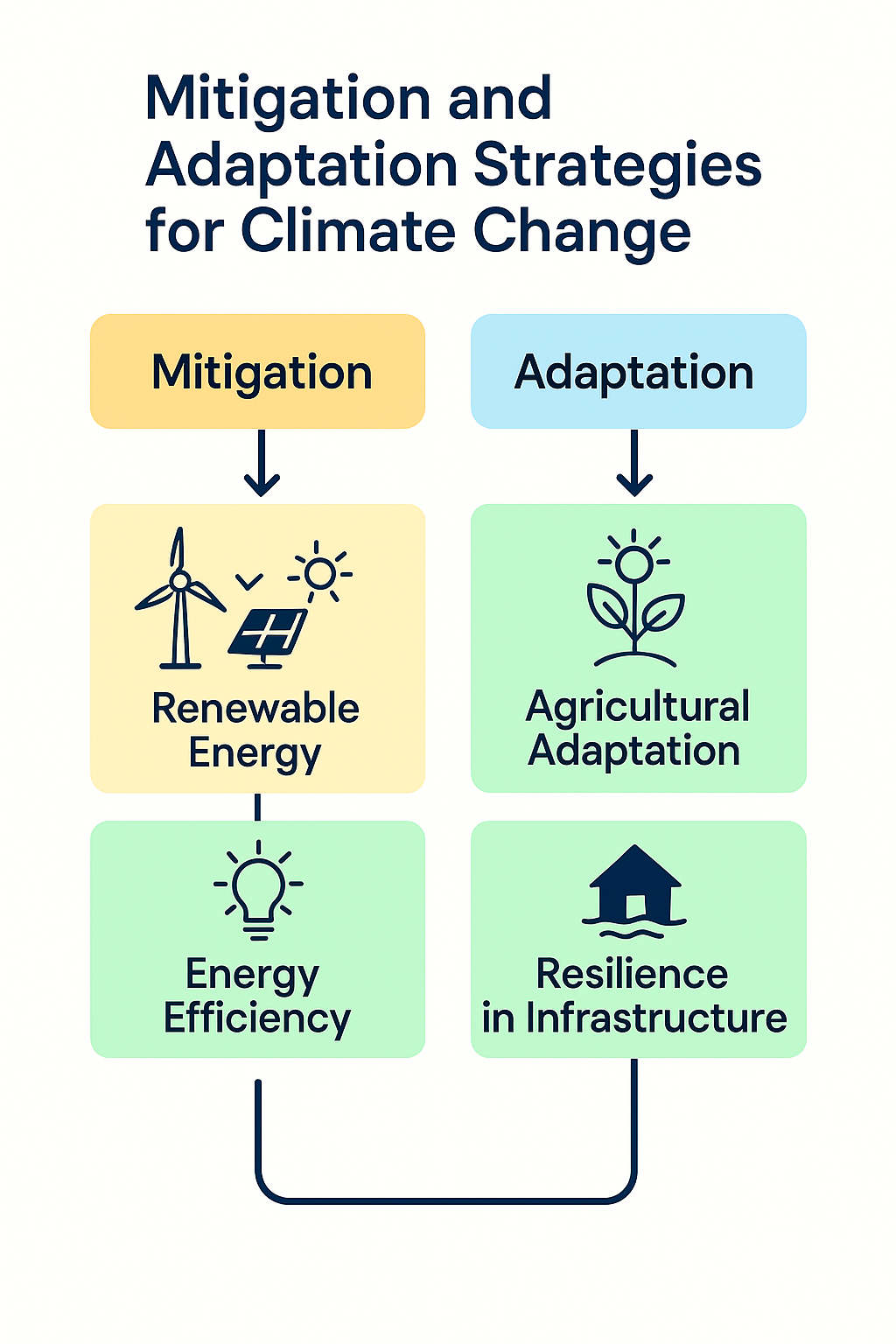
A holistic approach to climate action integrates mitigation and adaptation strategies. This can be seen in urban planning where green spaces serve both as carbon sinks (mitigation) and flood mitigation areas (adaptation). Similarly, agroforestry can increase carbon storage while providing crops that are resilient to climate variations.
Low-Carbon Technologies
Technological innovation is a key driver of climate action. Technologies such as carbon capture and storage (CCS), advanced battery storage for renewable energy, and new materials for construction that reduce energy consumption are at the forefront of the transition to a low-carbon economy.
Behavioural Changes and Public Engagement
The role of individuals and communities in climate action cannot be overstated. Public engagement through education and awareness campaigns encourages behavioural changes that contribute to mitigation and adaptation efforts. Simple actions like reducing energy consumption, choosing sustainable transport options, and supporting local conservation initiatives have a collective impact on reducing emissions and enhancing resilience.
Policy and Legislation
Effective climate action requires robust policy and legislation that supports both mitigation and adaptation efforts. The UK’s Climate Change Act and the subsequent carbon budgets set legally binding targets to reduce emissions. Planning regulations, building codes, and subsidies for renewable energy are examples of policy instruments that drive climate action.