
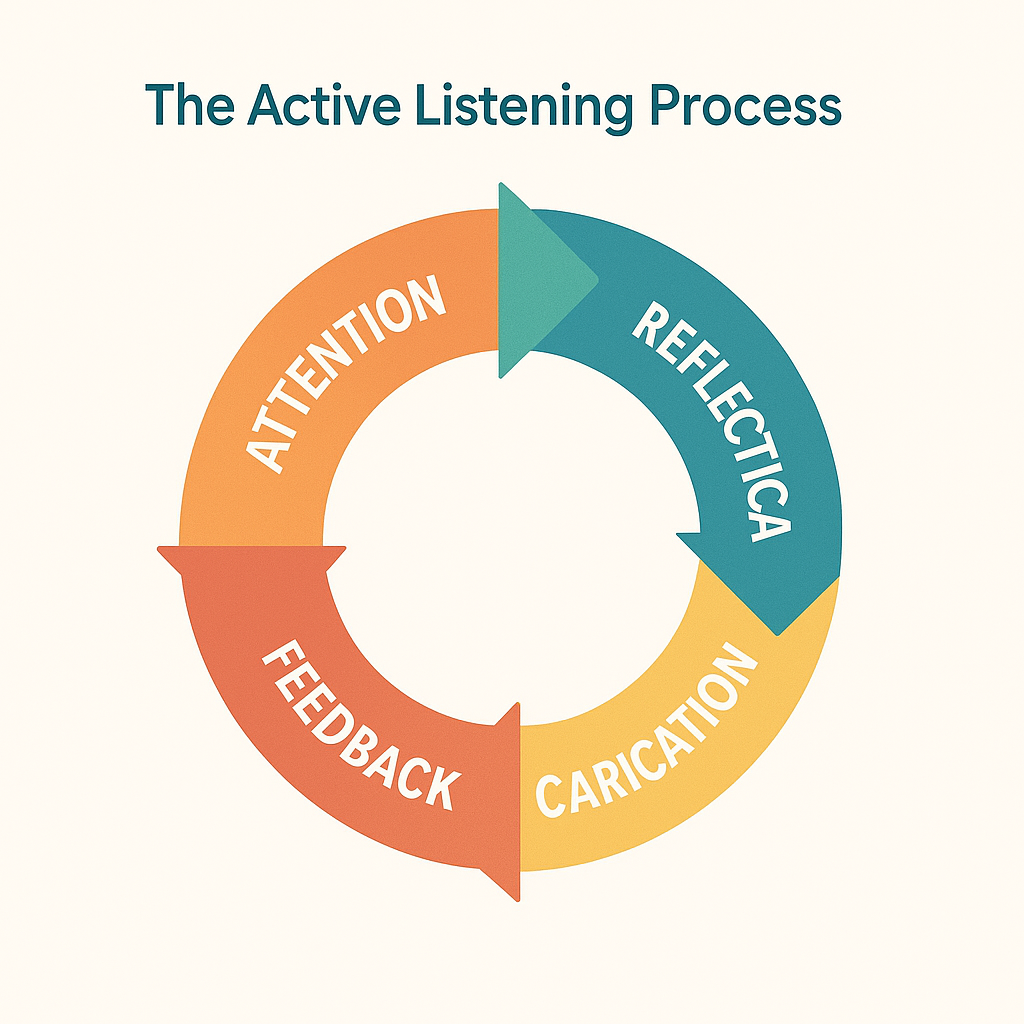
Active Listening
Active listening is more than simply hearing words; it’s about understanding the message being conveyed. It involves giving full attention to the speaker, showing interest, and responding in a way that validates their feelings and experiences. To practice active listening:
– Maintain eye contact (without staring) to show you are engaged.
– Use non-verbal cues like nodding to encourage the speaker.
– Avoid interrupting while the individual is talking.
– Reflect back what you have heard to confirm understanding.
– Ask open-ended questions to explore thoughts and feelings further.
– Summarize the conversation to ensure clarity on both sides.
Empathy in Communication
Empathy is the ability to understand and share the feelings of another. In mental health support, it involves:
– Acknowledging emotions without judgment.
– Validating feelings by using phrases like “It sounds like you’re feeling…”.
– Being patient as individuals may struggle to articulate their experiences.
– Avoiding assumptions about what the individual is feeling or experiencing; instead, ask them to describe their feelings.
Non-verbal Communication
Non-verbal communication is as important as verbal communication. It includes:
– Facial expressions: Ensure your expressions match the tone of the conversation.
– Body language: Open body language (uncrossed arms, leaning slightly forward) can make you seem approachable.
– Tone of voice: A calm, gentle tone can be reassuring.
– Personal space: Respect the individual’s personal space to avoid discomfort.
Active listening is more than simply hearing words; it’s about understanding the message being conveyed. It involves giving full attention to the speaker, showing interest, and responding in a way that validates their feelings and experiences. To practice active listening:
– Maintain eye contact (without staring) to show you are engaged.
– Use non-verbal cues like nodding to encourage the speaker.
– Avoid interrupting while the individual is talking.
– Reflect back what you have heard to confirm understanding.
– Ask open-ended questions to explore thoughts and feelings further.
– Summarize the conversation to ensure clarity on both sides.