
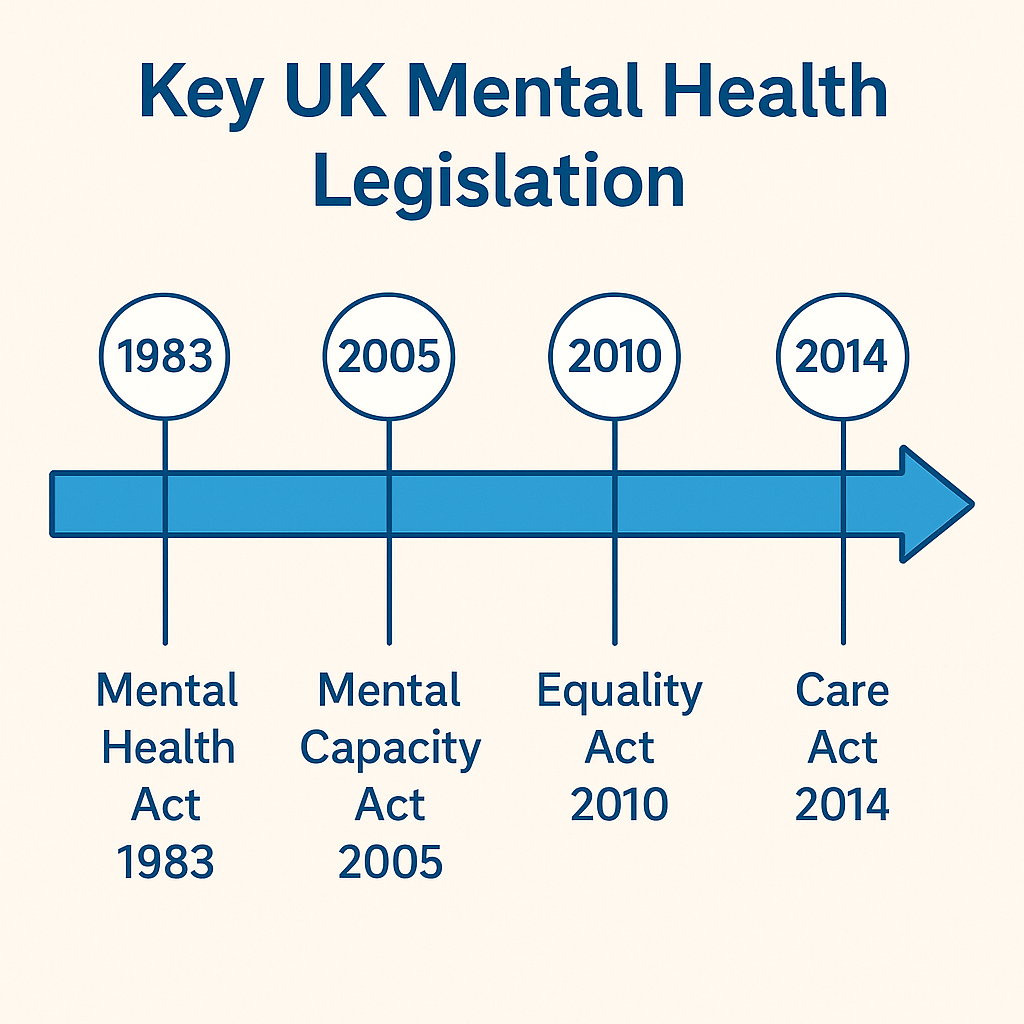
Mental health support work in the UK is underpinned by legal frameworks designed to protect the rights of individuals and to provide guidance for professionals. Understanding these laws is crucial for delivering effective and lawful support.
The Mental Health Act 1983 (amended 2007)
This Act provides the legal basis for the treatment and care of individuals with mental health disorders, including when someone can be detained in hospital against their will (‘sectioned’). As a support worker, it is essential to be aware of the conditions and processes stipulated by this Act to ensure lawful practice and to support individuals in understanding their rights.
The Mental Capacity Act 2005
This Act is designed to protect and empower individuals who may lack the capacity to make certain decisions for themselves. It is important for support workers to understand the five key principles of the Act and how to assess capacity. The Act also introduces Lasting Powers of Attorney and Deputies who can make decisions on behalf of someone who lacks capacity.
The Equality Act 2010
The Equality Act protects individuals from discrimination based on protected characteristics, including disability – which can encompass mental health conditions. Support workers need to ensure that they are not discriminating against service users and are making reasonable adjustments to support individuals’ needs.
The Care Act 2014
This Act sets out local authorities’ responsibilities for providing care and support to adults. It includes assessing needs, providing information and advice, and the safeguarding of adults from abuse or neglect. Understanding this Act helps support workers to navigate the care and support landscape effectively.
The Human Rights Act 1998
Incorporating the European Convention on Human Rights into UK law, this Act protects individuals’ fundamental rights. Support workers should be aware of the rights most relevant to mental health support, such as the right to respect for private and family life (Article 8) and the right to liberty and security (Article 5).