
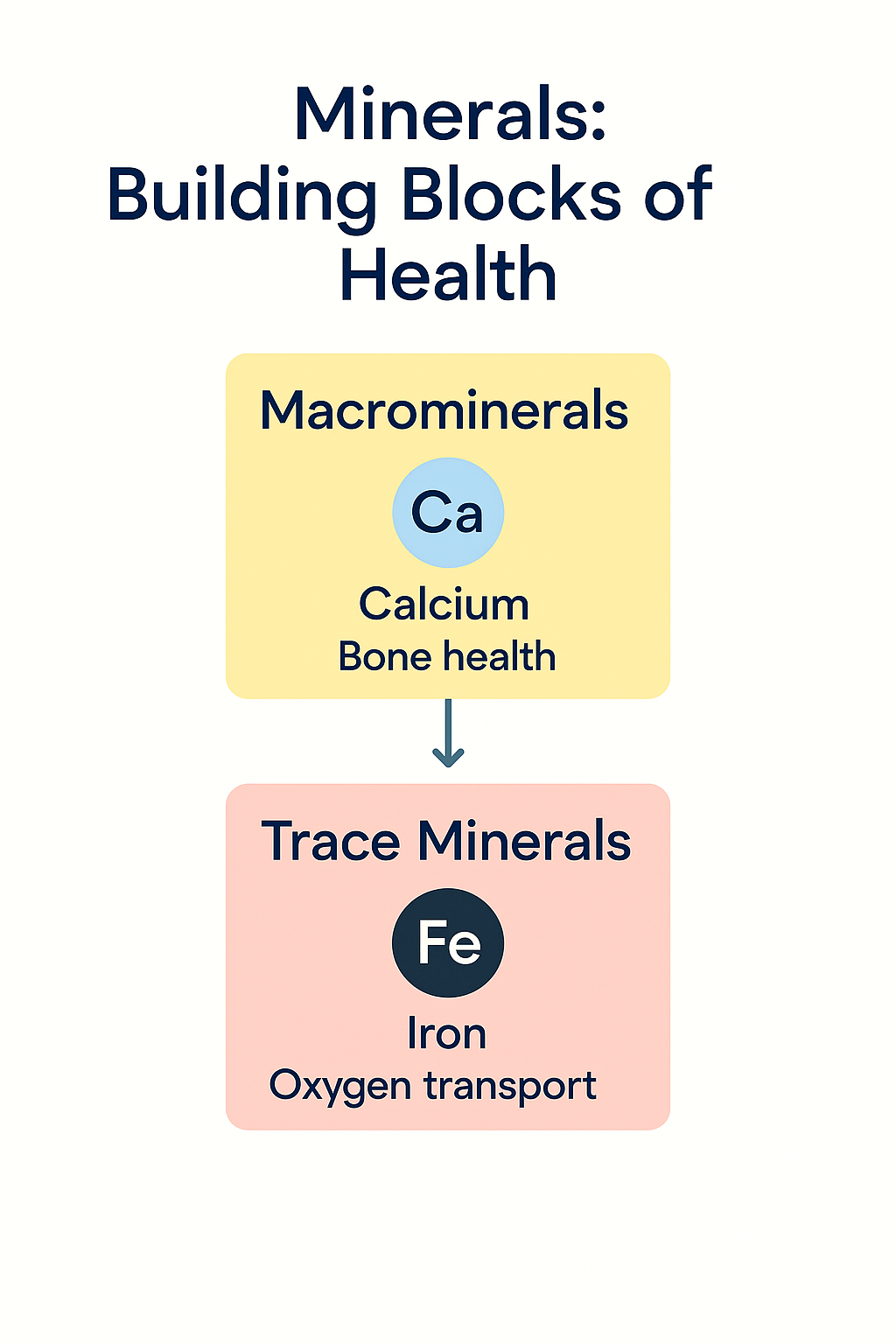
Minerals are inorganic elements that also come in two main categories – macrominerals and trace minerals.
Macrominerals
Macrominerals are needed in larger amounts than trace minerals and include calcium, phosphorus, magnesium, sodium, potassium, chloride, and sulphur.
Calcium is vital for building and maintaining strong bones and teeth. It also supports muscle function and nerve signalling. Sources include dairy products, fortified plant milks, and leafy green vegetables.
Phosphorus works closely with calcium to build strong bones and teeth. It is found in a wide range of foods, including meat, fish, dairy, and whole grains.
Magnesium is important for muscle and nerve function, blood sugar control, and blood pressure regulation. It can be found in nuts, seeds, whole grains, and leafy green vegetables.
Sodium, Potassium, and Chloride are electrolytes that help maintain fluid balance and are important for nerve function and muscle contractions. While sodium is often abundant in the diet, potassium sources include fruits like bananas and vegetables like potatoes.
Trace Minerals
Trace minerals are needed in smaller amounts and include iron, manganese, copper, iodine, zinc, cobalt, fluoride, and selenium.
Iron is essential for making haemoglobin, which carries oxygen in the blood. Sources include red meat, beans, nuts, and fortified cereals.
Zinc supports the immune system, wound healing, and DNA synthesis. It is found in meats, shellfish, dairy products, and whole grains.
Iodine is crucial for thyroid function, which regulates metabolism. It’s most commonly found in seafood and iodised salt.