
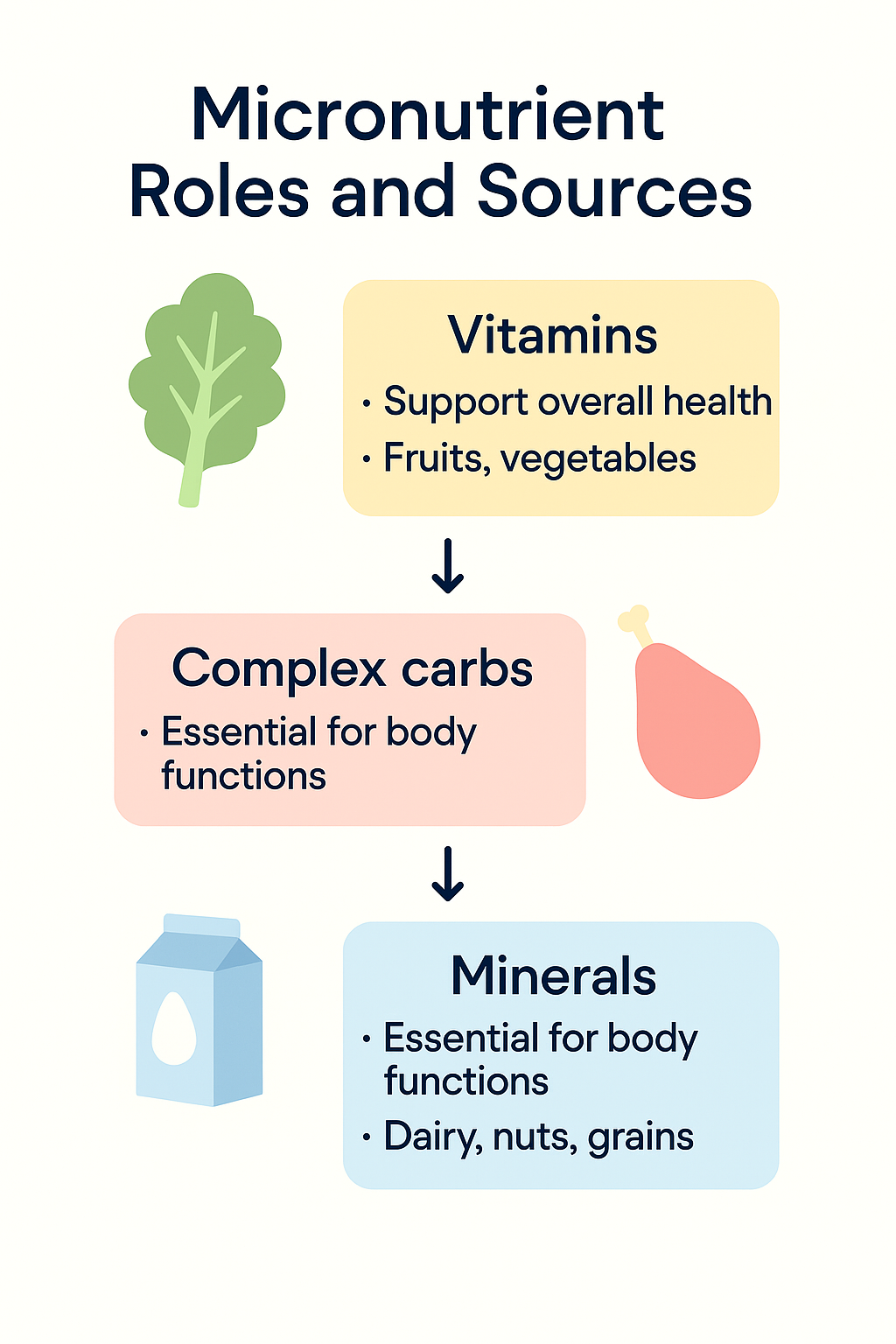
Vitamins are organic compounds that the body needs in small quantities. They can broadly be divided into two categories – fat-soluble and water-soluble.
Fat-Soluble Vitamins
Fat-soluble vitamins include vitamins A, D, E, and K. They are stored in the body’s fatty tissue and liver, and are best absorbed when eaten with dietary fat.
Vitamin A is crucial for vision, immune function, and skin health. Sources include liver, dairy products, and vegetables such as carrots and sweet potatoes.
Vitamin D is unique because it can be synthesised by the body with the help of sunlight. It is essential for calcium absorption, which is necessary for healthy bones and teeth. Dietary sources include oily fish and fortified foods.
Vitamin E acts as an antioxidant, protecting cells from damage. It’s found in nuts, seeds, and green leafy vegetables.
Vitamin K is important for blood clotting and bone health. It can be found in green leafy vegetables, such as kale and spinach, and in some fermented foods.
Water-Soluble Vitamins
Water-soluble vitamins include the B-complex vitamins and vitamin C. These vitamins are not stored in the body and need to be consumed regularly. When you consume these vitamins with water (as in supplements or from food), they dissolve in the watery environment of your stomach and intestines and are then absorbed directly into your bloodstream.
B Vitamins are a group of eight vitamins that play a role in converting our food into energy. They also contribute to healthy skin, hair, and brain function. Good sources include whole grains, meats, legumes, and a variety of fruits and vegetables.
Vitamin C is known for its role in immune function and also serves as an antioxidant. It’s found in citrus fruits, strawberries, bell peppers, and broccoli.