
A web browser is a software application that enables users to access and navigate the World Wide Web. Browsers request web pages from servers using HTTP or HTTPS protocols and render the content in a human-readable format. Popular browsers include Firefox, Chrome, and Safari, each with unique features and performance characteristics.
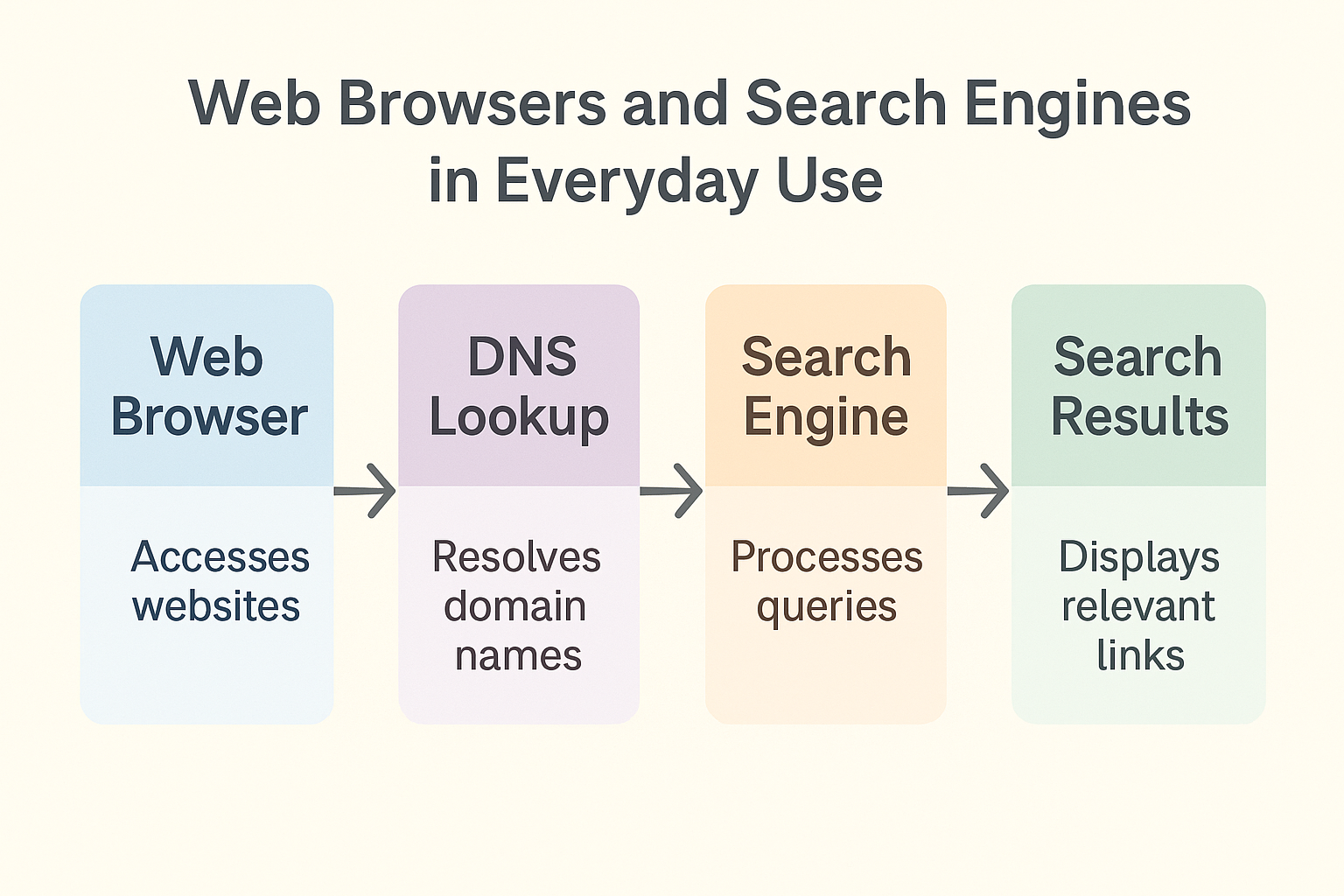
Upon entering a URL or clicking on a hyperlink, the browser initiates a DNS lookup to resolve the domain name into an IP address. It then sends an HTTP request to the server at that IP address. The server responds with the requested web page, often including HTML, CSS, and JavaScript, which the browser interprets to display the page correctly.
Search Engines
Search engines such as Google, Bing, and Yahoo! are sophisticated platforms that index the vast amount of information available on the Internet. When a user submits a query, the search engine retrieves the most relevant results from its index using complex algorithms that consider factors like keywords, website authority, and content freshness.
Search engines use web crawlers to discover and index web pages. These crawlers follow links from one page to another, capturing information about each page’s content and metadata. This data is stored in massive databases, enabling quick retrieval when a search query is performed.