
Cloud computing refers to the delivery of computing services—such as storage, processing, and software—over the Internet. Users can access these services on-demand without managing physical hardware or installing software locally.
Cloud services are often categorized into three types:
– Infrastructure as a Service (IaaS): Provides virtualized computing resources over the Internet.
– Platform as a Service (PaaS): Offers hardware and software tools for application development.
– Software as a Service (SaaS): Delivers software applications over the Internet, typically on a subscription basis.
Cloud computing relies on data centres and virtualization technology to allocate resources dynamically. This enables scalability and flexibility for users, who can adjust their service usage based on current needs.
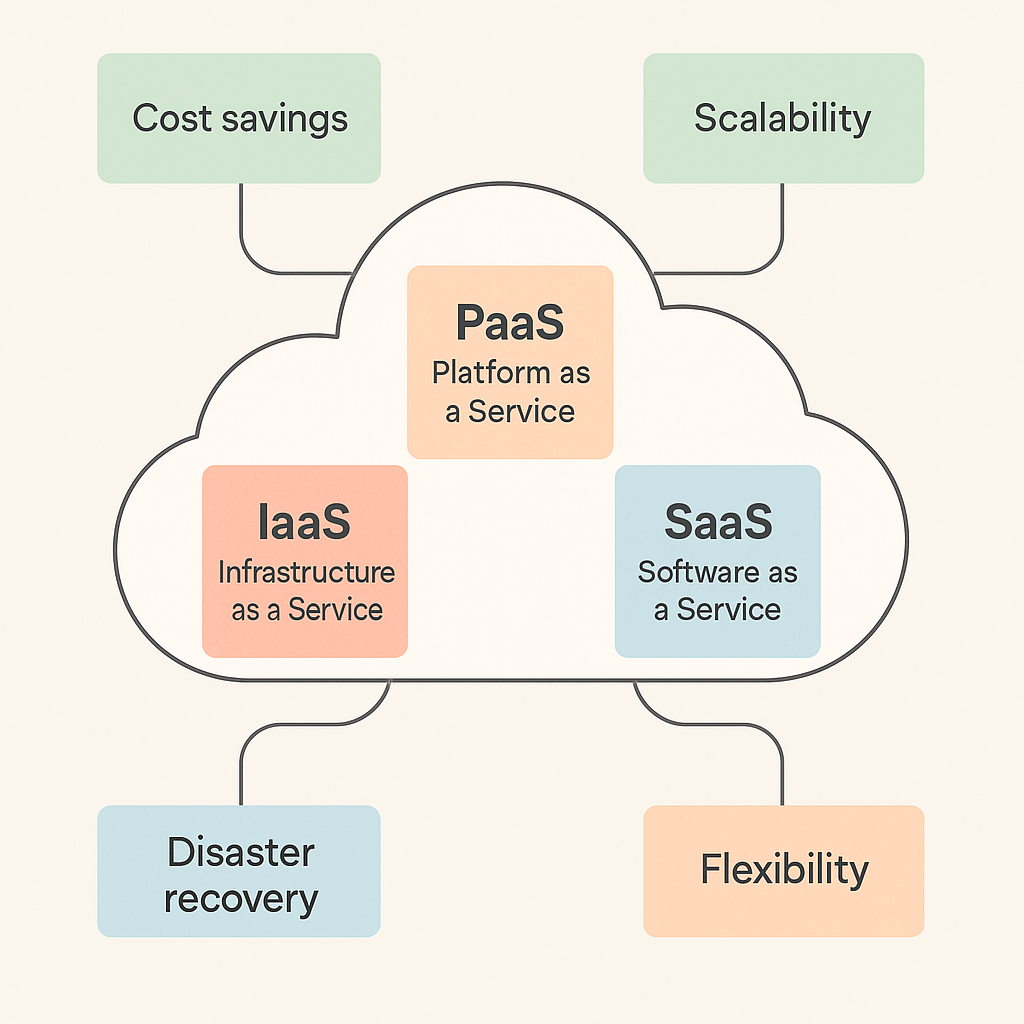
Benefits and Applications
The benefits of cloud computing include cost savings, as users pay only for what they use; increased productivity, with the ability to collaborate in real-time; and enhanced security, with data backups and disaster recovery often provided by the service.
Applications of cloud computing are widespread, from personal file storage services like Dropbox and Google Drive to enterprise solutions like Amazon Web Services (AWS) and Microsoft Azure. These platforms support a range of applications, including data analysis, artificial intelligence (AI), and Internet of Things (IoT) devices.