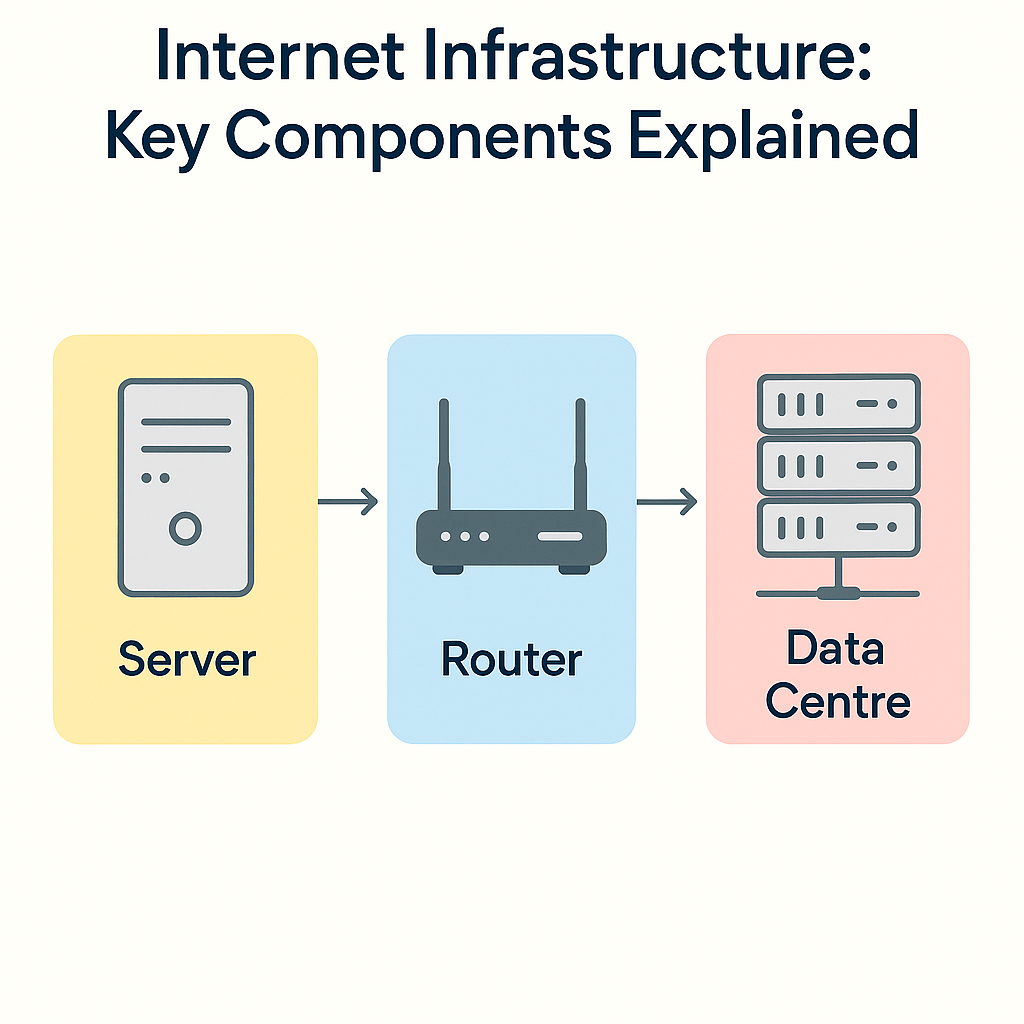
Welcome to Section 1 of our course exploring the Internet in everyday life. In this section, we will delve into the structure of the Internet and explore how data is transmitted across the world in a matter of seconds. We will cover the physical infrastructure of the Internet, including the role of servers, routers, and data centres. Additionally, we will discuss the importance of protocols in data transmission and how they enable the seamless flow of information. Let’s get started!
The Physical Infrastructure of the Internet
The Internet is a colossal network of networks, a web of connections that spans the entire globe. At its core, the physical infrastructure of the Internet includes components such as:
Servers: These are powerful computers that store and distribute data. They host websites, manage email systems, and store online files. Servers process requests from clients (usually your computer or mobile device) and respond by sending the requested information back to the client.
Routers: These devices are crucial for directing data packets across the network. Routers inspect the destination of the data and determine the best path for it to travel through the network. They can be found at various points in the Internet’s infrastructure, from your home router connecting your local network to the Internet to large routers in data centres that manage vast amounts of traffic.
Data Centres: These are facilities that house a large number of servers. Data centres are the backbone of the cloud services and are responsible for keeping the Internet operational around the clock. They are equipped with redundant power supplies and advanced cooling systems to ensure that the servers run efficiently and without interruption.