Purpose:
This activity helps you spot signs of fake or malicious emails, websites, and messages designed to trick people into giving away personal details.
What to Do:
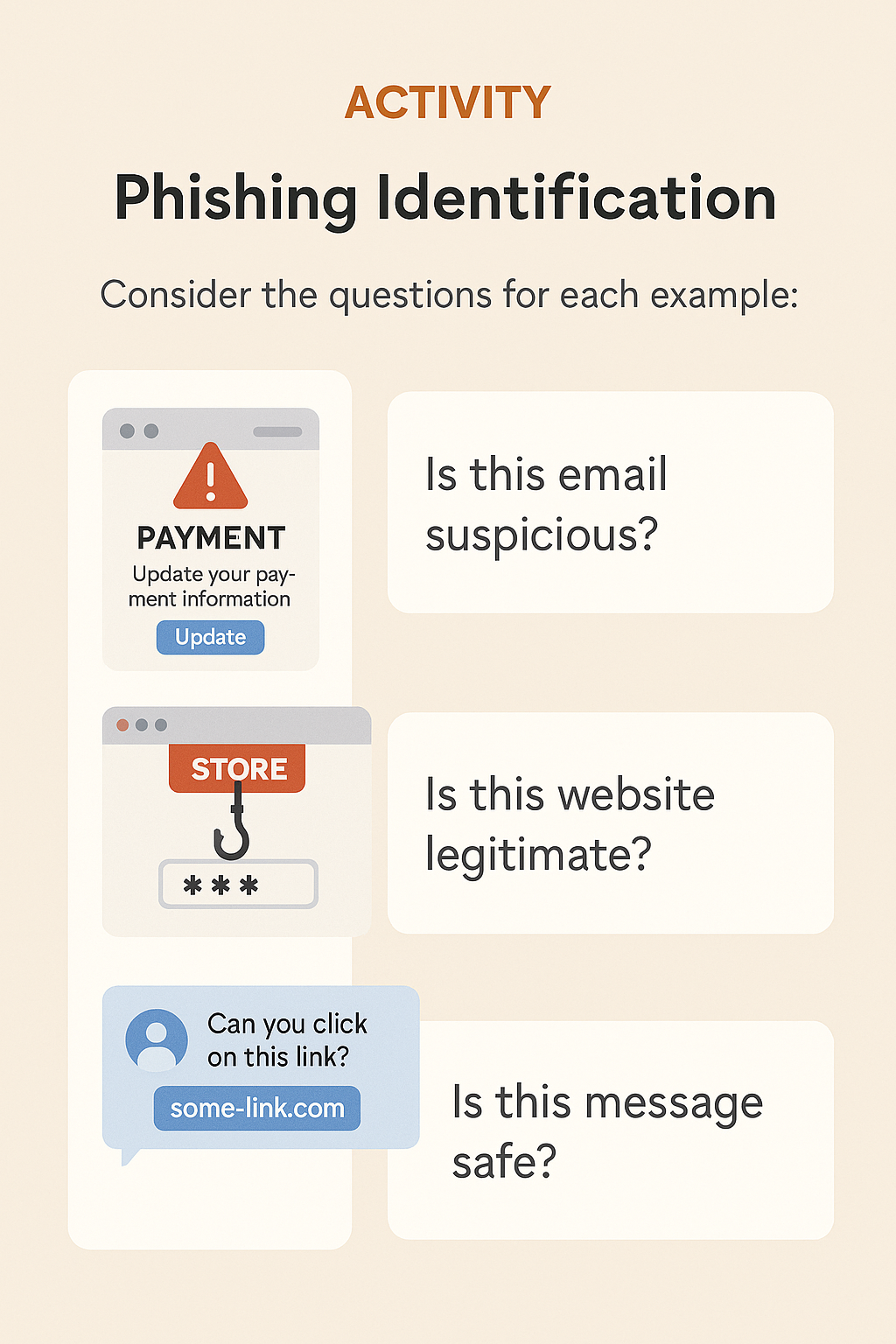
Look at the provided examples of suspicious content: a fake email, a dodgy text message, and an untrustworthy login page. For each one, think about the warning signs:
- Is the sender’s email address odd or unfamiliar?
- Does the message create a sense of panic or urgency?
- Are there spelling mistakes or strange-looking links?
- Does the website feel a bit off—like the design doesn’t match the real thing?
Reflect:
You don’t need to write full answers. Just spend time thinking about how to recognise phishing attempts and how you would respond in a real-life situation. The more you practise spotting them, the better prepared you’ll be.