
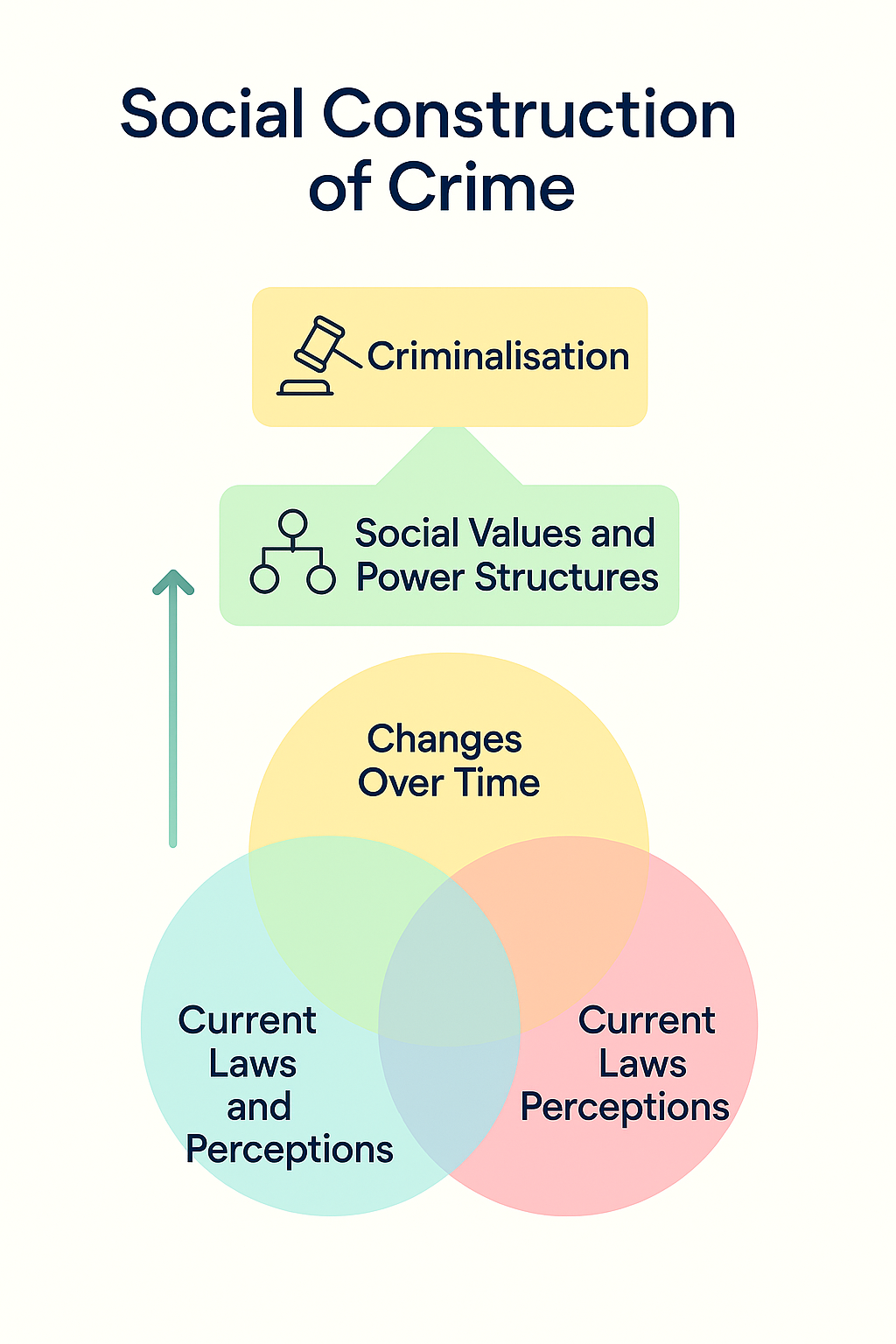
Crime is not simply a set of actions that violate the law; it is also a social construct. What is considered criminal behaviour can vary significantly across different cultures and historical periods.
The process of criminalisation involves societal decisions about which behaviours are harmful and should be prohibited by law. These decisions are influenced by social values, political ideologies, and power structures. Understanding the social construction of crime allows us to recognise that the boundaries between lawful and criminal behaviour are not always clear or fixed and that they can change over time.
Given the knowledge of crime patterns, trends, and social constructions, criminologists and policymakers can develop strategies to prevent and reduce crime. These strategies can be categorised into three main approaches: primary, secondary, and tertiary prevention.
Primary prevention aims to deter crime before it occurs by addressing broad social issues that contribute to criminal behaviour, such as poverty, inequality, and lack of education. Secondary prevention targets specific groups or environments at higher risk of crime, such as youth intervention programs and neighbourhood watch schemes. Tertiary prevention focuses on preventing reoffending by providing rehabilitation and support to individuals who have already been involved in the criminal justice system.
Effective crime prevention requires a multifaceted approach that combines these strategies and involves collaboration between the community, law enforcement, and various social services.