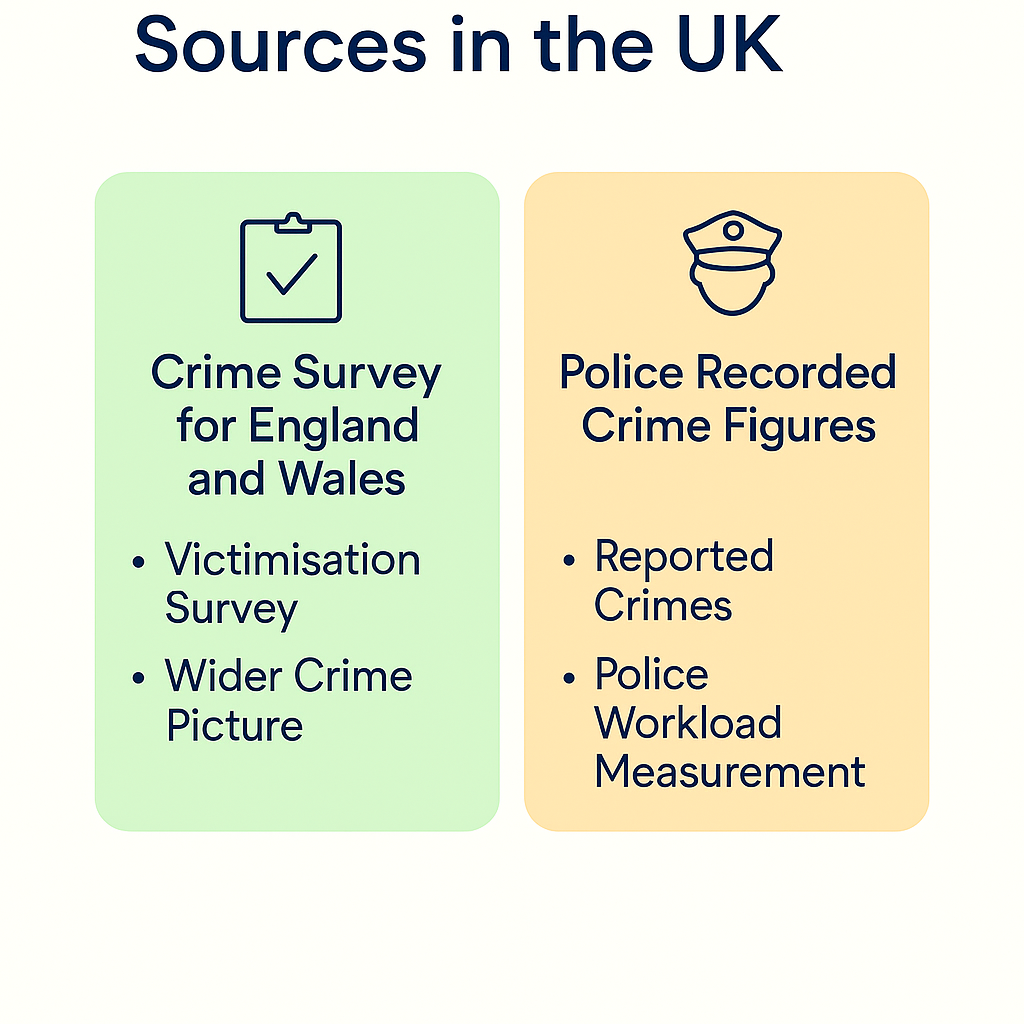
Crime statistics are a vital tool for criminologists, policymakers, the police, and the public. They provide a quantitative measure of the level of crime within a society at a given time. In the UK, the two main sources of crime data are the Crime Survey for England and Wales (CSEW) and police recorded crime figures.
The Crime Survey for England and Wales is a victimisation survey that asks individuals about their experiences with crime over the past year. It includes crimes that have not been reported to the police, offering a broader picture of the true extent of crime. On the other hand, police recorded crime figures consist of crimes reported to and recorded by the police. These statistics are crucial for understanding the workload of the police and the types of crime they are dealing with.
Comparing these two sources provides a more comprehensive understanding of crime in society. For instance, the CSEW might indicate a higher level of crime than police records due to the inclusion of unreported crimes. This discrepancy highlights issues such as underreporting and the ‘dark figure of crime’ – crimes that occur but are not reported or recorded.