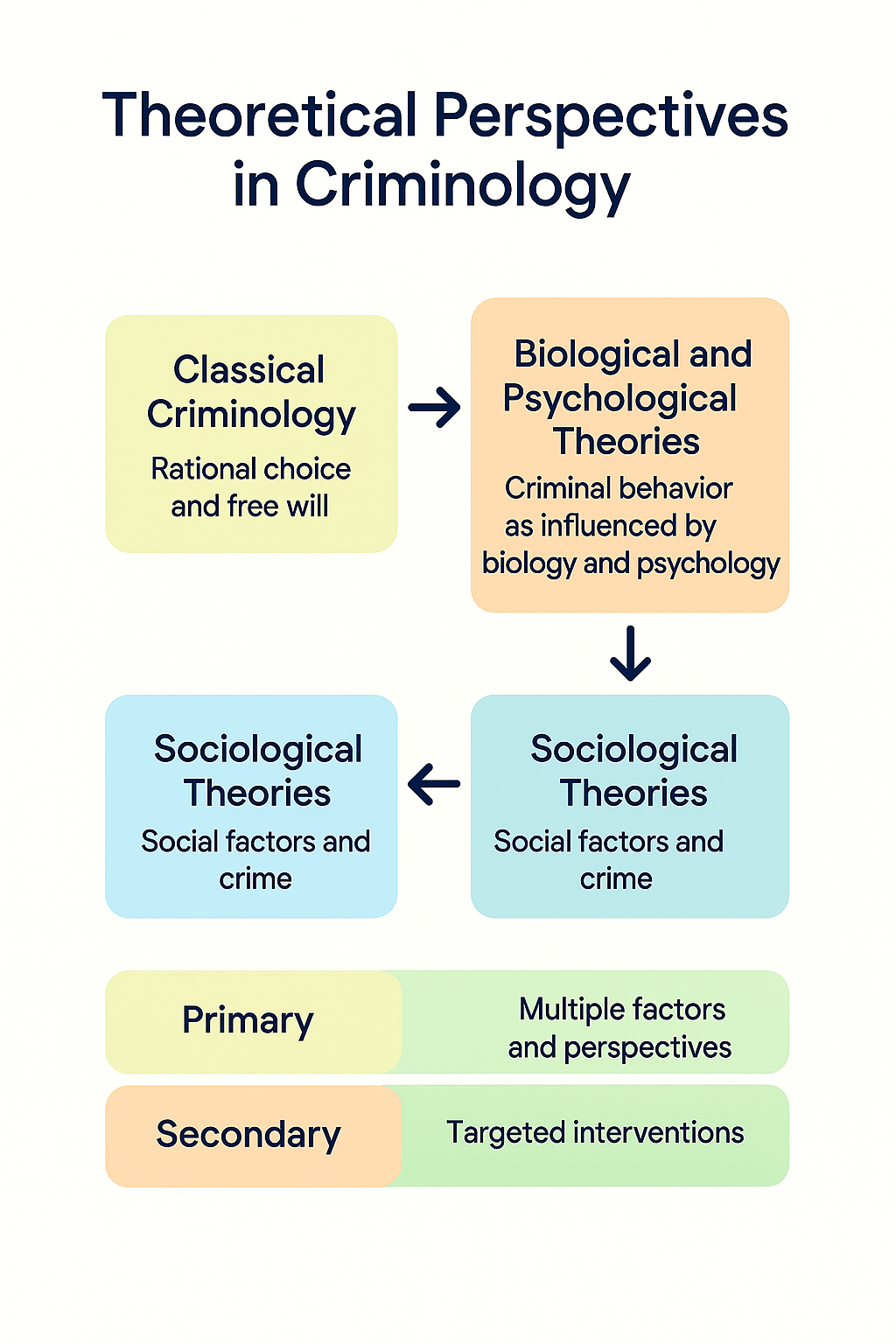
1. Anomie and Strain Theories: Building on the work of Émile Durkheim, Robert K. Merton’s strain theory suggests that crime occurs when there is a disjunction between societal goals and the legitimate means to achieve those goals. This “strain” may lead individuals to engage in criminal acts as an alternative way to fulfil their aspirations.
2. Social Disorganisation Theory: Clifford Shaw and Henry McKay proposed that high crime rates are linked to the breakdown of social institutions, such as the family, education, and employment, particularly in urban areas. These disorganised communities may lack the social cohesion necessary to regulate behaviour and prevent crime.
3. Differential Association Theory: Edwin H. Sutherland’s differential association theory posits that criminal behaviour is learned through interaction with others. Individuals commit crime because they are exposed to an excess of definitions favourable to violation of law over definitions unfavourable to violation of law.
4. Labelling Theory: This perspective, associated with Howard Becker, suggests that crime and deviance are not inherent qualities of an act but are instead the result of society’s reaction to that act. Being labelled as a “criminal” can have profound consequences for an individual’s self-identity and future behaviour.
5. Control Theories: Control theorists, like Travis Hirschi, ask why people do not commit crime. Hirschi’s social bond theory contends that strong social bonds to family, school, and other institutions reduce the likelihood of criminal behaviour. People conform because of an investment in conventional activities and a fear of jeopardising their social relationships.